Why Toasting Spices Changes Their Aroma
Toasting spices changes their aroma and can deepen a dish’s fragrance. Learn which whole spices suit a dry toast and how to stop before they scorch.
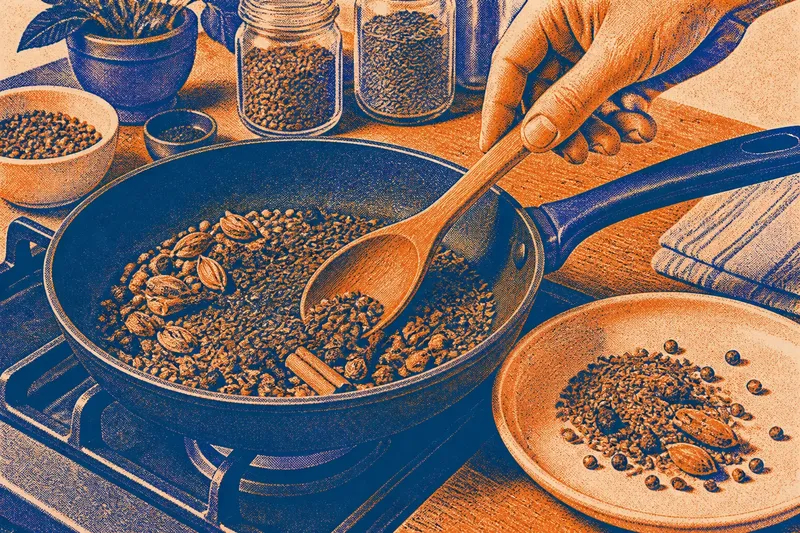
The common mistake with toasting spices is waiting for a fixed time or dramatic color change; delicate seeds may already smell scorched by then. Toasting spices changes their aroma quickly, so watch the pan and let fragrance—not a timer—guide you.
What changes when you toast whole spices?
As whole spices warm, their scent can shift from grassy, dusty, or sharp toward something fuller, nuttier, sweeter, or more resinous. The change depends on the spice, its freshness, and how much heat it receives.
Heat can also dry a spice and make it more brittle, so it cracks or grinds more readily. Toasting is not a simple way to make every spice more flavorful: too much heat can mute delicate notes and bring bitterness.
Cumin may smell earthier, coriander can seem rounder and citrusy, and black pepper may turn more woody. Treat these as possible changes, not promises; the scent from your own pan is the useful cue.
Which whole spices are good candidates?
Firm whole spices are often convenient to toast in a dry skillet. Cumin, coriander, fennel, mustard seed, cardamom pods, cloves, cinnamon pieces, and peppercorns are common choices, though ingredients in a blend may warm at different rates.
Some spices call for a gentler method. Saffron is often steeped in warm liquid, while ground spices expose more surface to heat and can scorch quickly; a recipe may instead add them directly to oil or liquid.
Consider where the spice will go. One meant for a long-simmered stew may be handled differently from one sprinkled over a finished dish. Follow the recipe’s sequence when it provides one, rather than treating dry toasting as an automatic upgrade.
How do you know when toasting spices is done?
Use your nose before your eyes. A clear, more open fragrance is a better cue than a dramatic color change; small seeds may shift or pop, while larger pieces can remain quiet.
Use a clean, dry skillet over gentle heat, spreading the spices in a loose layer. Stir or shake the pan often so they keep moving. When the scent opens up, transfer them promptly to a cool plate; a heavy skillet may keep warming them after it leaves the burner.
Keep your face back from the pan and waft the scent toward you, especially with pungent spices. If anything smokes, smells acrid, or develops blackened patches, remove the pan from the heat. Color can help, but dark spices may offer little visual warning, so toast different-sized ingredients separately when they warm at noticeably different rates.
Should you use a dry pan or oil?
A dry skillet suits whole spices you plan to grind or add later. It leaves the spices easy to monitor and does not add fat at this stage.
Toasting in oil, often called blooming, is a different method. Warm fat carries spice aromas into the dish, making it a natural fit when a recipe starts a curry, dal, or braise by cooking spices in oil.
The methods are not interchangeable. Dry-toasted spices can be ground or added later; bloomed spices are already part of the cooking base. If the recipe starts with onions or other ingredients in the pan, follow its order instead of pulling spices out for a separate toast.
Should you grind spices before or after toasting?
For most whole spices, toast first, let them cool, and then grind. Whole seeds give you more time to notice their fragrance than powder, which has much more surface exposed to the heat. Cooling also makes them easier to handle.
A mortar and pestle gives you control over a coarse crush; a clean spice grinder makes a finer powder. Use a dedicated grinder or clean it thoroughly so coffee residue does not dominate a small batch of cumin or cardamom. Grind what the dish needs, since crushed spices lose their lively aroma sooner than intact ones.
Say you are making lentils and have whole cumin and coriander. You toast both in a dry skillet, but notice the smaller cumin seeds smell warm and vivid before the coriander does. You move the cumin to a cool plate, keep stirring the coriander until its scent opens, then cool and crush both. The observable result is that the spices smell more pronounced in the pot; how much they alter its flavor depends on the ingredients and the dish.
Why do toasted spices smell different as they cool?
Warm spices send more aroma into the air, so they may seem especially powerful straight from the pan. As they cool, the scent can become quieter and more focused. Smell them again before grinding, then judge their character in the dish.
Freshness matters: an old jar may have lost much of its aroma before it reaches the skillet, and heating cannot restore what has faded. If a whole spice smells faint or stale when crushed between your fingers, a longer toast may not help.
Let toasted spices cool completely before storing them in a clean, dry, airtight container away from heat and direct light. Mark the jar if it could be mistaken for an untoasted batch. For a fresher fragrance, toast close to the time you plan to cook rather than preparing a large supply far ahead.
What should you do if the toast smells wrong?
If the spices smell sharp, smoky, or bitter, take them off the heat and spread them on a cool plate. Do not try to cover a scorched smell by adding more spices to the same pan. If the burnt aroma remains, use a fresh portion and a clean skillet; the bitter note may carry into the dish.
If the seeds look unchanged but smell more fragrant, they may be ready. If they still smell raw, keep the heat gentle, stir, and check again rather than turning up the burner. A dark roast is not the goal; an even, pleasant fragrance is more useful than a bold color change.
Not worth the effort: toasting every spice automatically or chasing an exact time across different pans and burners. Neither tells you whether the spice smells right for the dish. Let the aroma lead, and follow the recipe’s sequence when spices cook with other ingredients.
What do cooks ask about toasting spices?
Can you toast spices in the microwave?
A microwave can warm a small batch unevenly, making it harder to keep the spices moving and notice their changing fragrance. A skillet gives you a direct view and lets you stir or shake the spices as they toast.
Can toasted spices become bitter?
Yes. Excessive heat can turn a warm, fragrant smell acrid and leave a bitter taste, especially if spices sit still in a hot pan. Stop when their aroma opens up, then move them off the skillet.
Do you need to toast spices for every recipe?
No. Some recipes call for raw spices or add them directly to oil, broth, or another liquid. Toast only when it fits the recipe and the flavor you want.
Can you toast whole spices ahead of time?
You can, but fragrance gradually fades, particularly after grinding. Let toasted spices cool fully, store any extra sealed and away from heat and light, and grind them near the time you plan to use them.
Toasting spices changes their aroma, but the useful finish is the one that suits the dish, not the darkest seed or the longest toast. When a blend contains ingredients that warm at different rates, separate them or lift out the quicker ones as their scent develops.