Dried, Frozen or Fresh Herbs for the Dish at Hand
Choose dried, frozen or fresh herbs by texture, cooking time and flavor role, so each dish gets the right kind of aroma, color and finish.
The common mistake with herbs is treating dried, frozen and fresh as interchangeable, then adding whichever jar or bunch is closest. That can leave a bright salad tasting dusty or a slow stew carrying delicate leaves that have vanished into the pot. Dried, frozen or fresh herbs each have a role; match the form to the dish’s texture, cooking time and desired finish.
1. Choose dried herbs for long cooking and concentrated flavor
Dried herbs are at home in dishes that simmer, roast or bake long enough for their flavor to mingle with other ingredients. Their leaves are often crumbled or ground, so they disperse through sauces, braises, soups and marinades rather than appearing as distinct green pieces.
Oregano, thyme, rosemary and sage commonly suit this role. Add them early enough to soften and infuse the cooking liquid or fat. In a tomato sauce, for instance, dried oregano can settle into the sauce as it bubbles; scattered over a finished bowl, it may taste rough and dry instead.
Because drying concentrates and changes an herb’s character, don’t assume a dried spoonful behaves like the same amount of fresh leaves. Start modestly, taste as the dish cooks, and add more if the flavor needs depth. Keep the container closed and away from stove heat, where warmth and light can dull its aroma.
2. Use fresh herbs when leaves and fragrance should be visible
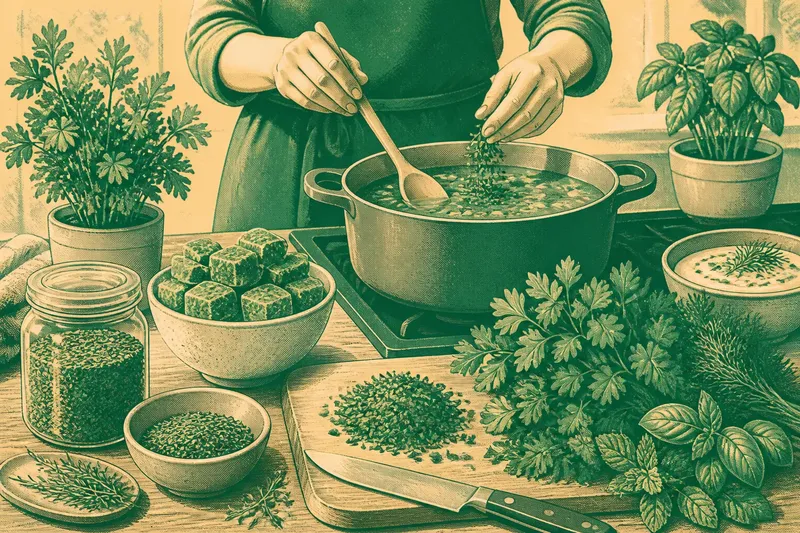
Fresh herbs contribute more than flavor: their tender leaves, vivid color and just-cut aroma can be part of a dish’s appeal. Parsley, cilantro, dill, basil and mint often shine in salads, herb sauces, grain bowls and garnishes, where a long simmer would mute their character.
Chop them near the time you plan to use them. A sharp knife helps keep delicate leaves from becoming bruised and wet; for larger leaves, tearing by hand can preserve an appealing, relaxed texture. Add the herbs at the end of cooking or directly to the serving bowl when you want their color and fragrance to remain clear.
Fresh doesn’t always mean uncooked. Sturdy leaves such as rosemary or thyme can go into a roast or stew early, while softer herbs are usually better added late. Think about the particular herb, not just its form: a sprig of rosemary can perfume a long-cooked dish, while chopped basil may lose its freshness in the same pot.
3. Reach for frozen herbs when convenience matters but green flavor still counts
Frozen herbs can bridge the gap between a fresh bunch and a jar of dried leaves. They are commonly chopped before freezing, making them useful for soups, stews, sauces and quick weekday cooking when you want green, herbaceous flavor without washing and cutting a bunch.
Freezing softens leaves, so thawed herbs usually won’t provide the springy texture or neat garnish that fresh leaves offer. Their strength is in dishes where the herbs will be stirred through something moist. Add them toward the end if you want their flavor to remain lively, or earlier if they need to blend into a longer-cooked dish.
Check whether the package contains plain herbs or a mixture with oil or other ingredients, since that affects how you add it. If freezing herbs at home, portion them in small amounts so you can take out what the dish needs without repeatedly thawing the whole supply.
4. Match the herb to the dish’s texture and cooking time
Ask two questions before choosing: Will the herb be eaten as a leaf, and how long will it cook? If the answer to the first is yes, fresh is usually the better fit. If the dish simmers for a while and the herbs should melt into its flavor, dried leaves or a sturdy fresh sprig may suit it better. Frozen herbs work well when you want chopped green flavor in a cooked, moist dish.
Imagine you’re making a pot of lentil soup with a bright parsley finish. You could simmer a little dried thyme with the lentils, stir in frozen parsley near the end for an easy green note, then add freshly chopped parsley at the table for color and a crisp herbal aroma. Each form has a distinct job rather than competing for the same one.
Texture matters even in cooked food. Dried rosemary leaves can remain woody unless finely crumbled or removed as a sprig; frozen chopped dill may blend neatly into a yogurt sauce but look limp on top of a salad. Choose the form that behaves well in the place it will land.
5. Which herb form fits common cooking questions?
Can I substitute dried herbs for fresh herbs?
Often, but the result may be more concentrated and less leafy. Add a restrained amount of dried herb, let it mingle with the dish, and adjust by taste rather than expecting a one-for-one match.
When should I add fresh herbs to a hot dish?
Add tender herbs near the end or after cooking if you want their color and aroma to stand out. Sturdy herbs can go in earlier, especially when their flavor needs time to infuse the dish.
Are frozen herbs suitable as a garnish?
They can add flavor, but freezing softens their texture and can make them look less lively. For a garnish meant to stay distinct and leafy, choose fresh herbs; save frozen ones for stirring into sauces, soups or other moist dishes.
Which herbs are easiest to keep in dried form?
Robust herbs such as oregano, thyme, rosemary and sage are often practical in a dried pantry, especially for cooked dishes. Delicate herbs used for fresh color and fragrance are usually more satisfying fresh or frozen.
6. Keep the decision simple, and skip the fussy substitutions
A useful kitchen habit is to choose the herb form when you decide what role it will play: background flavor, green substance or finishing aroma. Dried herbs can build a quiet base, frozen herbs can bring chopped green flavor to cooked food, and fresh herbs can contribute a distinct leaf and fragrance. The right choice depends on the dish, not on a universal ranking.
There’s little benefit in converting every recipe into exact fresh-to-dried arithmetic or buying an elaborate set of herb containers. Keep a few dried staples you use often, freeze extra herbs in convenient portions when that suits your cooking, and buy fresh bunches when their leaves are central to the meal. For dried, frozen or fresh herbs, a quick look at the texture you want and the time they’ll spend cooking is usually enough to make the choice.