Before the Refrigerator: How the Icebox Changed Kitchen Routines
Before the refrigerator, the household icebox tied food storage to ice delivery, daily chores, and meal timing. See how it reshaped kitchen routines.
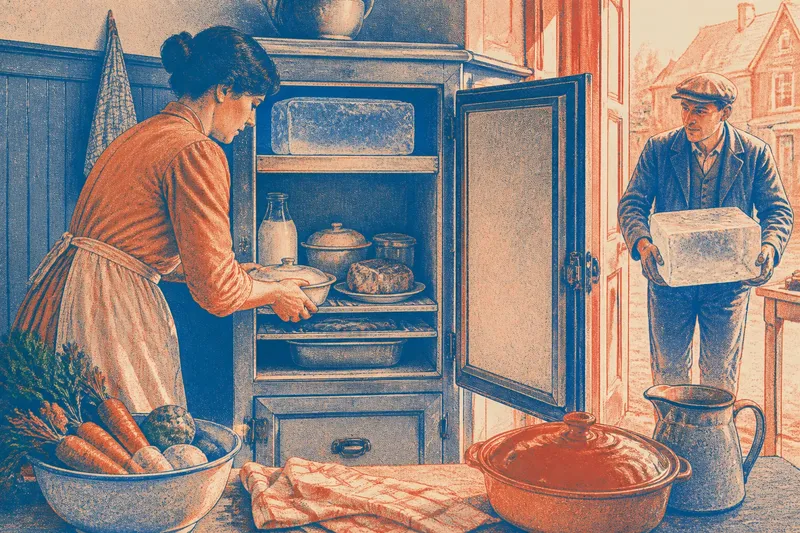
The costly mistake in an icebox kitchen was treating it like a cupboard: put food away, close the door, and forget it. In many American households during the late nineteenth and early twentieth centuries, an icebox meant a household cabinet built for regular kitchen storage, but its cooling depended on a fresh block of ice and the cabinet’s condition. Families had to plan around delivery, drainage, and what needed using soon.
How did an icebox differ from an electric refrigerator?
A household icebox was an insulated cabinet, often lined with metal, with a compartment for a block of ice near the top. Cold air moved downward through the storage space, while meltwater collected in a pan or drained away. The cabinet relied on ice being replaced, not on a motor switching on whenever the temperature rose.
In American kitchens, electric refrigerators gradually became an alternative during the early decades of the twentieth century, but the transition was uneven. Household means, local services, available electricity, and the cost and upkeep of early machines all shaped what families could use. An icebox tied food storage to an ice supply and recurring household labor; an electric refrigerator offered mechanical cooling but introduced a different set of practical demands.
Which household routines depended on ice access?
There was no single icebox routine. Household size, access to ice, cooking habits, and the kinds of food kept on hand all mattered. These situations illustrate how the cabinet could change planning in different kitchens.
If ice delivery was dependable, what worked?
A household with regular access to delivered ice could organize meals around a fresh block and use the cabinet for perishables, milk, and leftovers. Checking the ice and meltwater became part of ordinary kitchen work, while foods most vulnerable to warmth generally called for earlier attention.
If ice was difficult to obtain, what changed?
Where deliveries were irregular or ice came from far away, the icebox could not serve as a dependable reserve. A household might buy perishables more cautiously, cook smaller amounts, and rely more on pantry foods that did not need chilling.
If the household cooked once for several meals, what mattered?
Leftovers could be saved, but storing them meant making space and accounting for the available ice. The household had to decide which dishes to eat soon and which could sensibly wait, rather than assuming every pot could sit in the cabinet indefinitely.
If meals depended on a garden or market visit, what helped?
Fresh produce might arrive all at once, while cold space remained limited. A cook could plan to use more perishable items first and reserve the coldest space for foods that needed it most, allowing sturdier vegetables to carry later meals.
How did ice delivery shape kitchen work?
Ice delivery connected a private kitchen cabinet to a neighborhood service. In many American communities, an iceman brought blocks to homes and cut them to fit an icebox. The block’s size, the cabinet’s insulation, and the weather influenced how the household managed its supply.
Someone had to receive or store the ice, place it in the compartment, and deal with meltwater. A full drip pan could spill, while a clogged drain could leave water where food or cabinet materials were not meant to sit. The icebox added recurring chores to cooking and cleaning, not just a new place to put groceries.
Say a household in an American town receives a block on a warm morning and plans a roast for supper, with some meat left for the next day. The cook puts the roast in the cabinet’s coldest area, transfers the leftovers to a covered dish after supper, and checks the drip pan before bed. The result is a meal plan that uses the icebox’s limited cooling deliberately, while the household still has to judge whether the remaining ice and conditions suit keeping food for later.
How did an icebox change meal planning?
With limited cold space, shopping and cooking became linked to the cabinet’s contents. A cook might check whether milk, meat, or yesterday’s food already occupied the useful shelves before deciding what to buy. The icebox made inventory a physical act: open the door, see what remained, and plan the next meal accordingly.
It also encouraged selective storage of leftovers. A shallow dish might fit more easily than a large pot, while a covered container could protect food from spills and odors. These choices affected which dishes were cooked ahead, how much was prepared, and when a meal was finished.
Trying to make an icebox behave like a modern refrigerator is not worth the effort. It had neither constant mechanical cooling nor unlimited room. A realistic plan reserved its cold compartment for selected foods and relied on pantry storage, prompt cooking, and timely eating for the rest.
What do the cabinet’s features reveal about its limits?
Construction offered clues about how an icebox worked. Metal lining helped protect the interior and made surfaces easier to wipe, while insulation slowed heat from entering. Racks and shelves separated foods, but cold was not necessarily even throughout the cabinet. Placement mattered, and a crowded interior could obstruct the movement of cold air.
Drainage was essential, too. Meltwater had to go somewhere, so the household needed to empty a pan or keep a drain clear. The dwindling ice and collected water made cooling visible in daily life, unlike the more self-contained operation of many later electric refrigerators.
What do people ask about household iceboxes?
Did every American home have an icebox?
No. Access varied with household means, local ice supplies, and the kind of home. Some families used an icebox, while others relied more on cooking, pantry storage, and buying food as needed.
How did an icebox keep food cool?
A block of ice sat in a compartment, commonly above the food storage area. Cold air moved through the cabinet, and meltwater collected in a pan or passed through a drain.
Was an icebox the same as an ice chest?
The terms could overlap in everyday use, but an icebox generally meant a household cabinet designed for regular kitchen storage. Ice chest could refer more broadly to an insulated container, including portable forms.
Why did families still need a meal plan?
Iceboxes had finite capacity, and their cooling depended on replenished ice and a well-maintained cabinet. Families had to consider available space, the state of the ice, and which foods to use sooner.
Why does the household icebox matter in food history?
The household icebox makes food history tangible in the rhythm of ordinary work: a delivery to receive, a pan to empty, a shelf to clear, and a supper to plan around what the cabinet could hold. Before electric refrigeration became common in American kitchens, keeping food cool was not a silent background service. It was visible work.
That is why the icebox belongs in the story of household routine, not merely in a sequence of appliances. Its defining contribution was a new coordination between food, time, space, and labor. The phrase household icebox points to more than a cabinet: it describes a storage system whose daily demands reached from the ice supply to the next meal.