A Potluck Table That Makes Room for Different Dishes
A potluck table for different dishes needs clear labels, thoughtful spacing and a flexible layout, so guests can understand each plate and serve with ease.
The common potluck mistake is arranging every dish in a tight row and expecting guests to decode the spread as they go. A bowl of unfamiliar stew can end up overlooked, while serving spoons tangle and people crowd the same corner. A potluck table for different dishes works better when it helps guests read the meal at a glance without telling anyone what to cook.
The aim is not to make every contribution fit one cuisine or a tidy menu. It is to give each dish enough context, space and access to be enjoyed on its own terms. Most snags have a simple cause: the table is organized around containers rather than people moving through it.
Why does the serving line stall?
A bottleneck often forms when plates, napkins and utensils sit at the far end of the food, or when guests must reach across dishes to serve themselves. The queue pauses while someone searches for a spoon, asks what a dish is, or tries to pass a plate back against the flow.
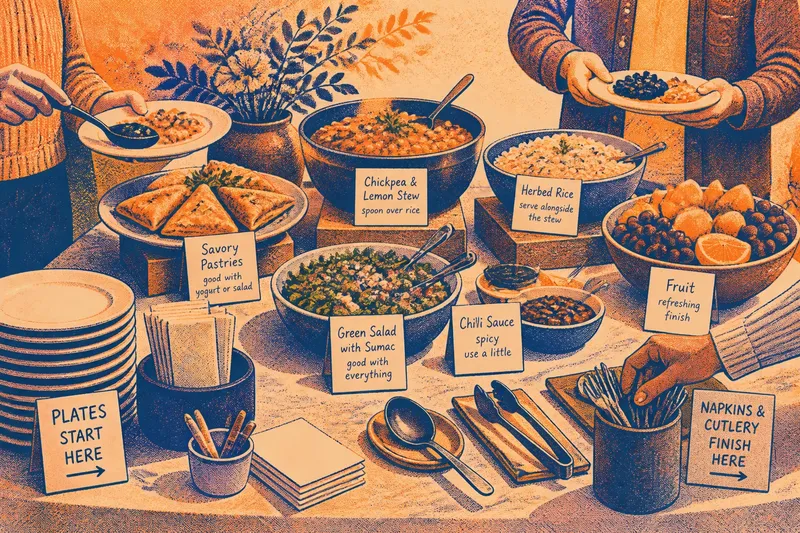
Set the plate stack at the beginning of the route, followed by food and then napkins and cutlery at the end. If guests can approach from both sides, make two matching plate-and-utensil stations and keep the dishes between them. Leave a clear path around the table rather than packing chairs, bags or extra dishes into the approach.
For a small dining table, a buffet route may be awkward. Put a few dishes on a sideboard or counter and leave the table for plates and seated eating; guests can make more than one trip without reaching over one another.
Why do some dishes disappear from view?
Low bowls can vanish behind tall serving pots, and delicate items can be crowded out by broad trays. The cause is usually a flat, uninterrupted arrangement: whatever occupies the most surface area claims the most attention.
Vary the height and shape of the display. Put sturdy, low dishes toward the front, and place taller serving bowls toward the back where they will not block labels or guests’ view. A stable, inverted tray or a broad, low box under a tablecloth can lift a dish; avoid makeshift risers that wobble or cannot bear the container.
Keep a little breathing room around items that need a ladle, tongs or a careful slice. That gap gives a guest room to serve without bumping a neighboring plate, and it makes each contribution easier to spot.
Why do guests keep asking what is in a dish?
A dish’s name may be familiar to the person who brought it and opaque to everyone else. A serving vessel can hide ingredients, and a handwritten label that says only “salad” leaves useful questions unanswered.
Put a small card beside each dish with its name and a plain-language clue about its ingredients or how it is served. “Chickpea and lemon stew, spoon over rice” gives more orientation than a name alone. If the host knows a dish’s name but not its contents, ask the contributor rather than guessing.
Offer a pen and blank cards near the table so a guest can clarify a label on arrival. Use cards large enough to read from a standing position, and keep them out of splashes. For food allergies or dietary needs, ask contributors to identify ingredients they know; guests with serious concerns should check directly with the person who prepared the dish.
Why do serving tools get mixed up?
One spoon can migrate from a sauced dish to a dry side, while tongs disappear beneath a tray. This is more likely when tools are supplied in a heap or have nowhere to rest between servings.
Set a suitable utensil beside each dish, with its handle easy to grasp. A small saucer can catch a spoon, and a clean folded napkin can serve as a resting place if the surface is stable. If a dish needs a particular tool—such as a pie server or chopsticks—place it where the need is obvious rather than making guests hunt for it.
When several dishes are served from similar bowls, attach a simple label to each tool or place it on the dish’s own saucer. That small distinction helps prevent accidental swaps without requiring a matching set of serving ware.
Why does the menu feel crowded even with enough food?
A table can feel confusing when every dish is presented as one long, undifferentiated sequence. Guests may not know whether a bowl is a main dish, accompaniment or something intended to be eaten with another item. The answer is not to impose a fixed menu, but to offer gentle cues.
Group dishes by how they might be used: substantial plates together, breads and grains nearby, and sauces or condiments beside the foods they could accompany. Leave room for guests to combine things as they like. A card can say “good with bread” or “serve alongside rice” when the contributor offers that guidance.
Say you are hosting a meal where a guest brings a tray of savory pastries, another brings a bean dish, and someone else arrives with fruit. Instead of lining them up by arrival time, you could put the pastries beside the bean dish, place the fruit at the far end as a separate option, and label each with its name and any serving suggestion the contributor provides. Guests can see a possible pairing without being told there is only one right way to eat.
What should you do when a dish arrives without a clear place?
Some contributions need more room, a serving surface, or a different temperature from the rest. The trouble starts when the host tries to wedge them into the nearest gap, disrupting the flow or leaving another guest’s dish hidden.
Keep one flexible spot open until people arrive. Ask the contributor where the dish should sit and what serving tool it needs; they may know that a crisp topping belongs on the side or that a sauce should stay near its companion. If space is tight, move a condiment or stack of plates to a separate surface instead of squeezing every container onto the main table.
If a contribution needs special handling, follow the contributor’s directions and relevant food-safety guidance. Do not leave food at room temperature longer than applicable advice permits; when timing or handling is uncertain, consult a qualified food-safety professional or local health guidance.
Which potluck table questions come up most?
Should every dish have a label?
Yes, a simple name card helps guests recognize a dish without interrupting the person who brought it. Add a brief ingredient clue or serving suggestion when it is known, and avoid inventing details.
How can guests with dietary needs choose safely?
Use clear ingredient information as a starting point, not a promise that a dish suits every need. A guest with an allergy or other serious concern should speak with the contributor and decide what feels safe for them.
Where should drinks go?
Place drinks and cups on a separate surface when possible, so guests reaching for a glass do not block the food. Keep water easy to find and set a place nearby for used cups.
What is not worth the effort?
Matching labels, serving ware and decorations add little if guests cannot reach the food or identify it. Use what you have, make the information legible and save elaborate styling for a table that already works.
How can you adjust the table once guests arrive?
Watch where people pause. If they cluster around one bowl, move its companion closer or make a second serving point; if a label is hidden, shift it forward. A potluck table is not a finished display but a shared working space, and small adjustments can make it easier to use.
Keep the contributor’s wording and preferences in view as you adjust. The host’s job is to make the meal legible, not to rename, rearrange or reinterpret someone else’s food. A little space, a readable card and a sensible route let varied dishes speak for themselves—and give guests room to decide what belongs on their plates.